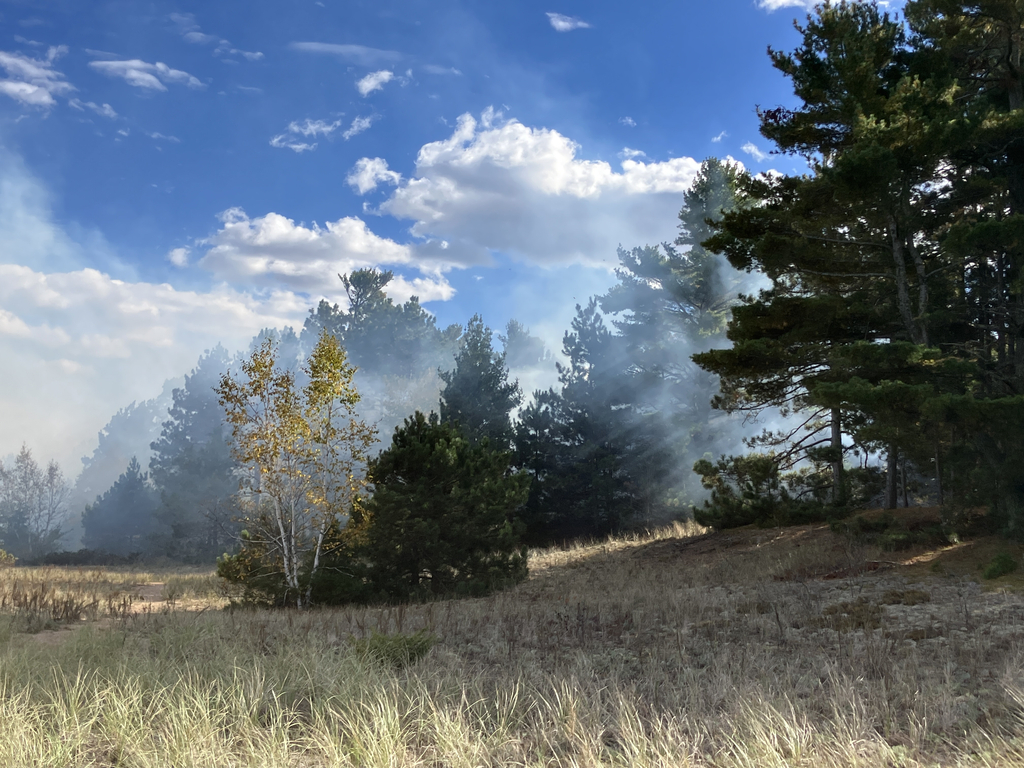
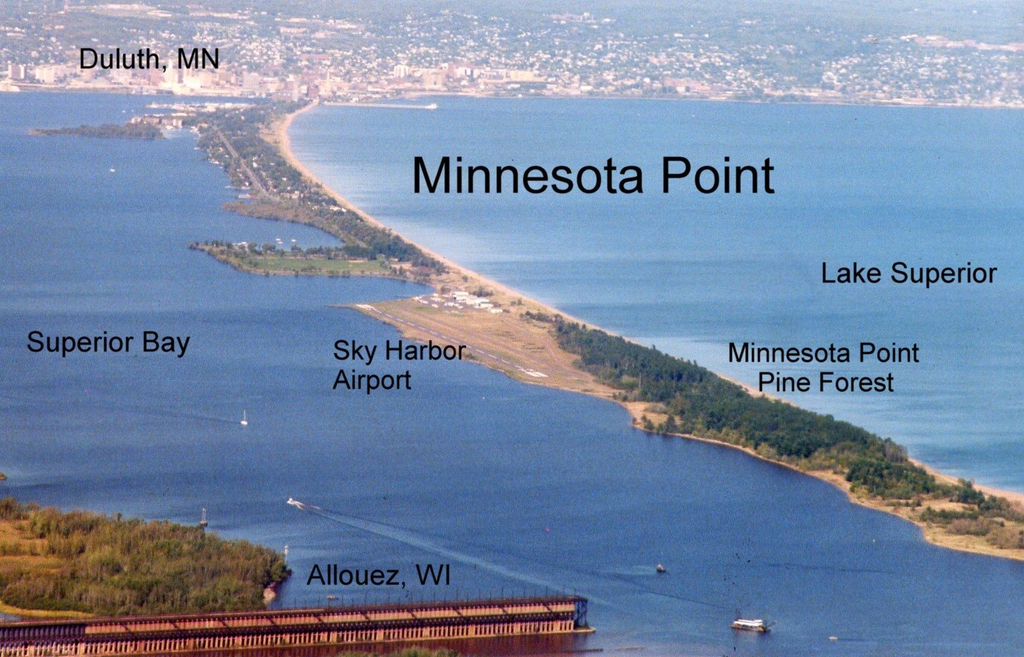
Two dozen fire-savvy technicians gathered at the eastern end of Minnesota Point in early October to “carry fire” to a fire-dependent ecosystem that hasn’t seen a controlled burn for more than one hundred years.
This seven-mile-long sandbar protects the cities of Duluth and Superior from Lake Superior’s most destructive storms. For generations, indigenous people burned carefully selected areas of the Point regularly to promote growth of pines and blueberries.
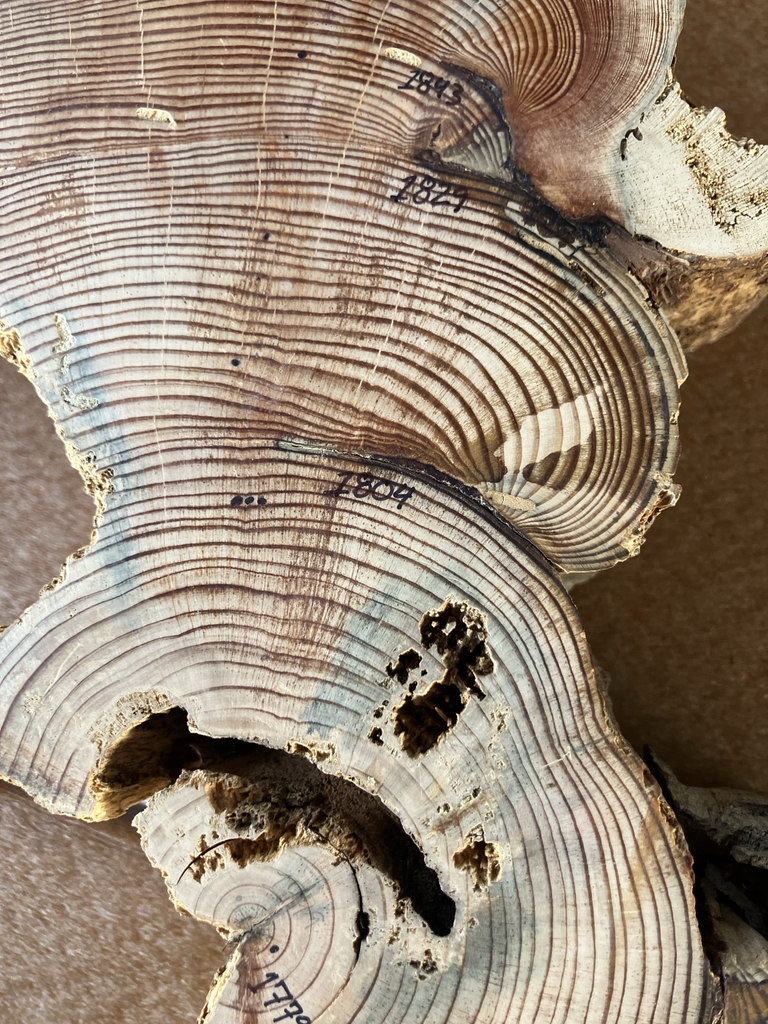
With the arrival of Europeans who forced them off their lands, they couldn’t conduct their burns. Still, the Point is recognized as a unique ecosystem. Part of one of Minnesota’s Scientific and Natural Areas, the point is home to old-growth red and white pines and provides breeding habitat for up to 16 species of northern forest birds.
The day was long-awaited and perfect: a slight but steady breeze from the west carried smoke across the beach to Lake Superior rather than across the bay to homes in Superior and Duluth. The presence of poison ivy on the Point prompted organizers to be especially cautious about wind direction.
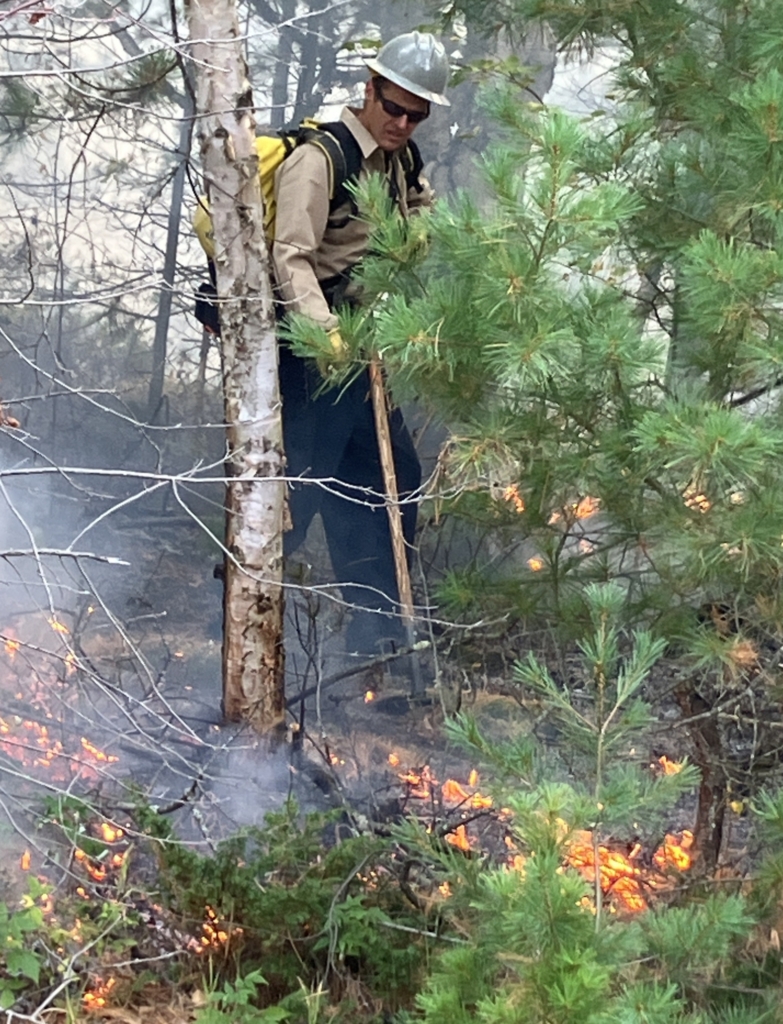
More than a dozen tribal, state, and federal agencies participated. The fire was lit with drip torches containing diesel and gasoline and gradually burned through about 17 acres of red and white pine.
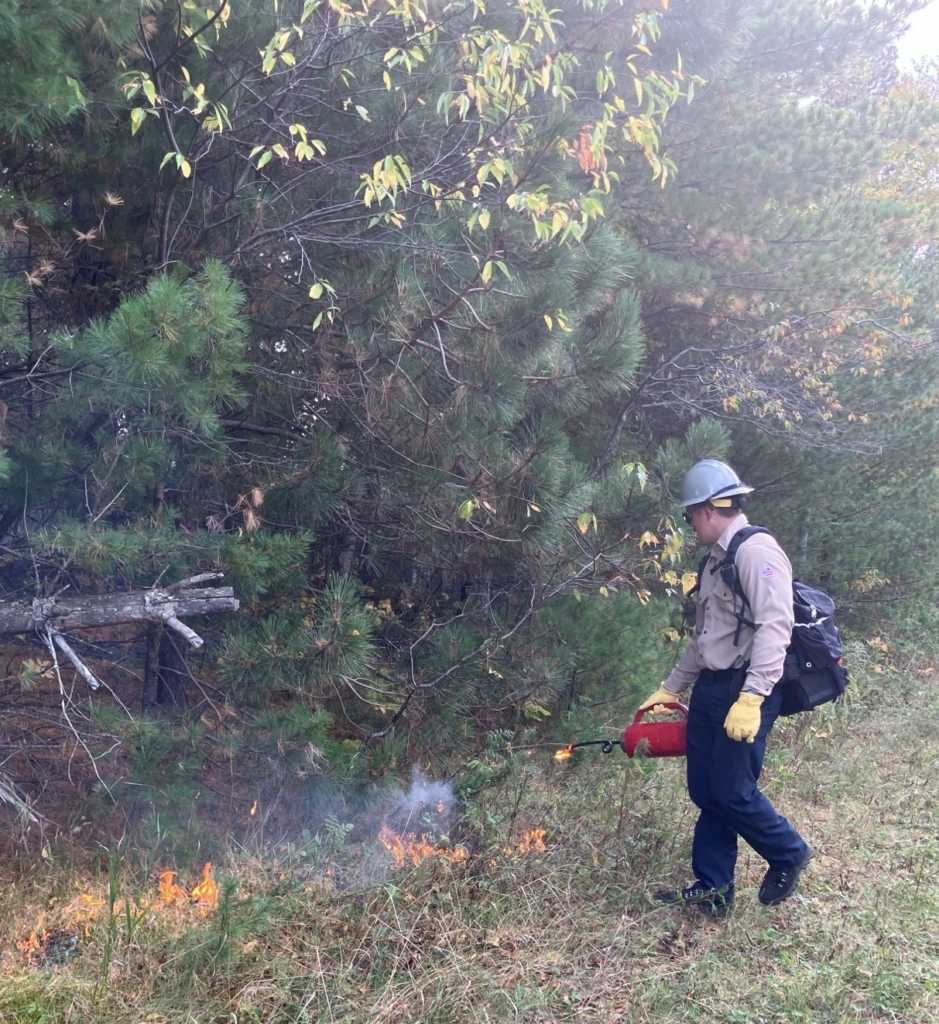
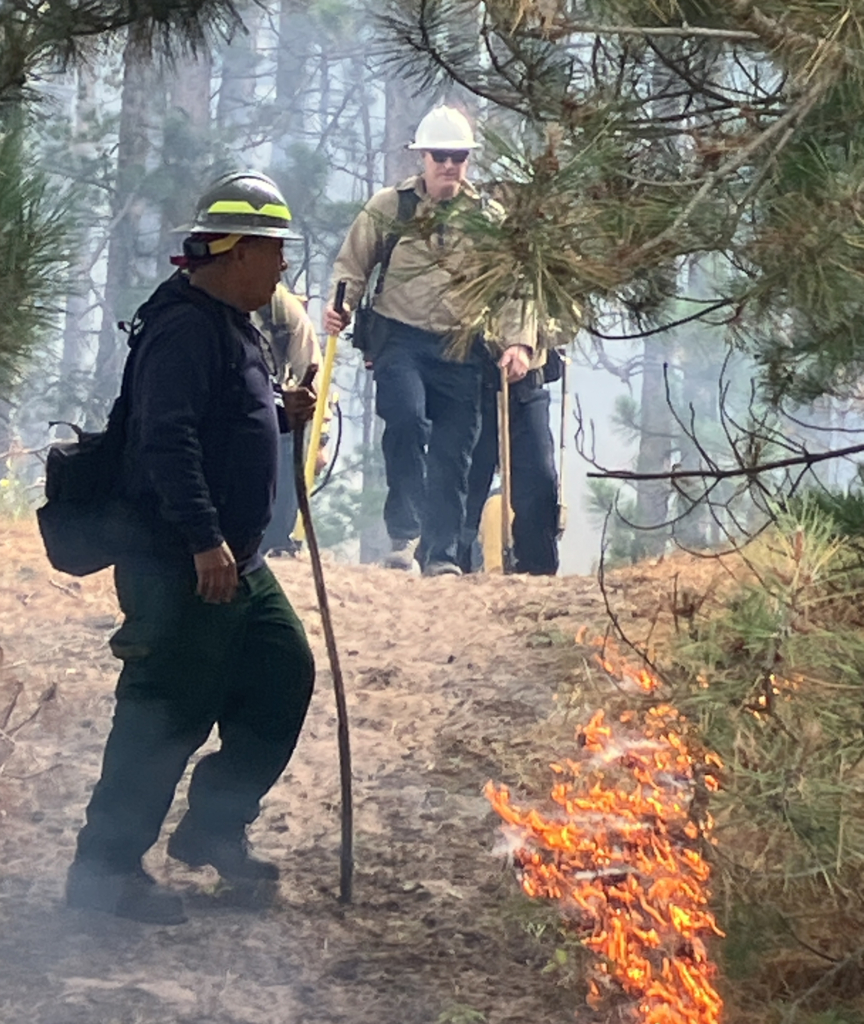
“It’s low and slow,” said Vern Northrup, an elder from the Fond du Lac Band of Lake Superior Chippewa and an experienced fire boss. “That helps us build a mosaic—a pattern of uneven age growth, which makes the forest less susceptible to disease and future fires.”
Northrup’s crew was working ahead of the main crew, carefully clearing around older trees, some as old as 300 years, and ‘culturally modified trees,’ which—years ago—had purposely been burned to allow the Anishinaabe to collect sap to make canoes. When the main crew arrived, the areas around these trees were already burned out, safe from a hotter fire.
Organizers expect this fire to have several benefits. Bazile Minogiizhigaabo Panek, a member of the Red Cliff Band of Lake Superior Chippewa and CEO of Good Sky Guidance, explained the specific goals: “To restore beneficial fire to the Minnesota Point pine forest, to reduce understory tree density, promote growth of fire-dependent and culturally significant species, improve habitat conditions for our animal relatives and increase public engagement with the point.”
Panek’s mother, Nisogaabokwe Melonee Montano, a member of the Red Cliff Band of Lake Superior Chippewa and a traditional ecological knowledge specialist with the Great Lakes Indian Fish and Wildlife Commission, said the event was healing for everyone who participated. “We truly believe fire has a spirit and we know that fire is helping us do this. I think it’s going to help not just us as humans but all of our more-than-human relatives that are around us—these trees, these birds that are singing. When we were doing a ceremony before the fire started, we saw crows carrying food out, and we realized they already knew what was coming and they were preparing ahead of time. We did it with the best of intentions, we asked for their permission to be here, to carry fire, we showed that we were trying to do it in a good way, not only to help us but to help them, so that we can all continue enjoy this landscape in the future.”
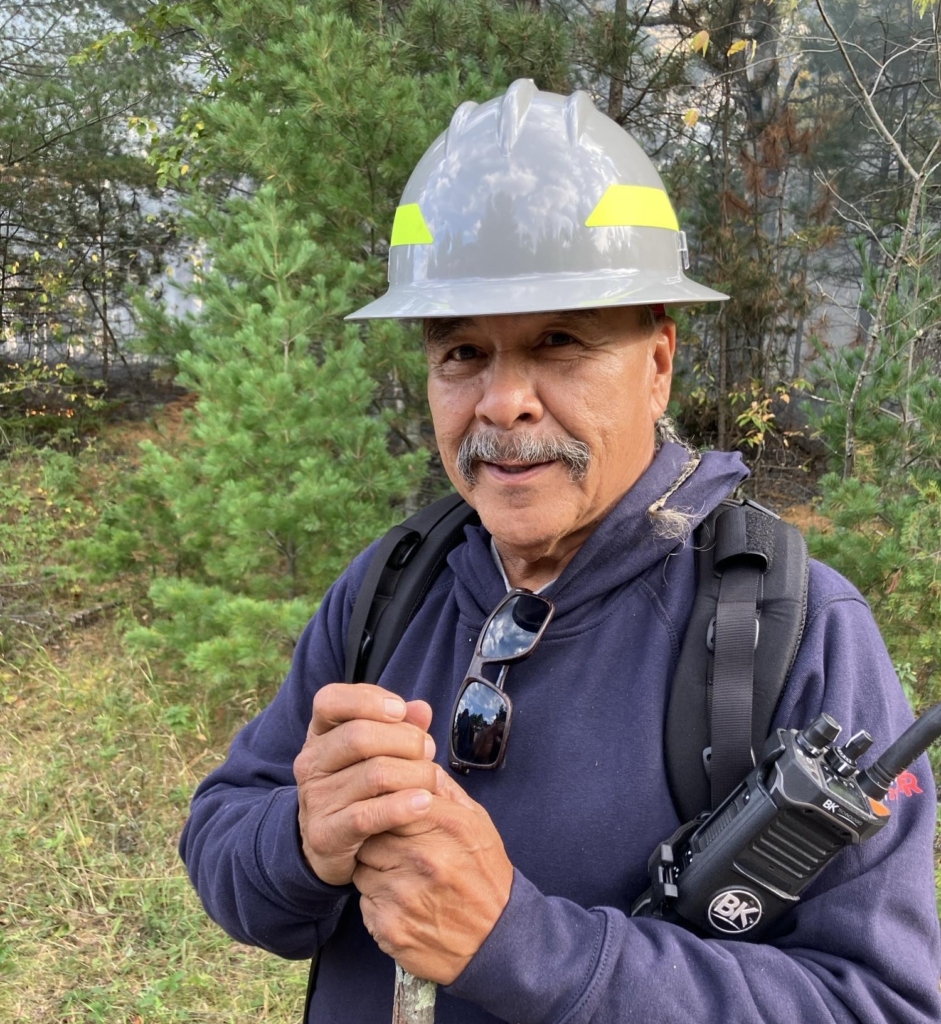
In addition to clearing the ground down to the mineral soils needed by red pine, ishkode benefits blueberries, said Northrup. “Blueberries grow on a five-year cycle. In the first year you’ll have good plants, in the second year some blueberries, third year really good blueberries, then the fourth year starts to decline and then the Anishinaabe would hit them with fire again. They’d do a plot here and a plot there, so every year you’d have good blueberries. It was a stewardship reciprocity relationship we had with the earth.”
Before the Anishinaabe had drip torches, they used a hefty staff wrapped at the bottom with birchbark and sprinkled with flammable pine sap, Northrup said.
Lane Johnson, Research Coordinator and Forester at the Cloquet Forestry Research Station, explained that this fire is like a ‘deep cleaning’ for a long-neglected house. “Once we get rid of the larger fuels, we can get back to a maintenance schedule,” he said. That would likely be every three-to-five years.
Evan Larson came from Platteville, where he teaches at the University of Wisconsin, to observe the fire. He supervised student research that identified some of those ‘culturally modified’ trees. In an article published by PNAS Larson argued that the practice of controlled burns is the force that kept this area stable for hundreds if not thousands of years. In the article, he suggests that restoring fire “will honor treaty rights, restore a critical socioecological process for maintaining the structure and function of a rare plant community, and reestablish reciprocal relationships in place since time immemorial that have been on pause for the past 150 years.”
You can see before-and-after photos here:
